
Last year was full of hard realizations, setbacks and unpleasantries. As I wade through my trauma with my therapist, I can’t help but notice the patterns throughout my life, and my sad attempts at coping with everything that tries to pull me under, so to speak. Which brought me to thinking about my experience in the local east river yoga community.
It was during my 200hr yoga teacher training course when I experienced my very first Ashtanga class. The instructor was all about voice. Which, I could understand, with his theatre background and his desperate need to always be heard. Plus, I always appreciate a good annunciator. But I was immediately startled when he belted out the first command. I was embarrassed by my most-likely-terrified-appearance. Hoping no one else in the class noticed, I always want to appear ‘cool’. I’m not afraid of anything, remember.
I was tense for the rest of the class, but with a slight smile to show them I was unafraid. I didn’t understand my PTSD very well at the time, so I felt very ashamed that I was so anxious and uneasy for the entirety of the class. My feelings couldn’t be right, these people knew what they were doing, right? It was me that was the problem, I thought. It must just be because I’m not experienced, that’s got to be it.
I continued to go and put on my smile and try to enjoy it, maybe I could get over my fear of a man shouting this way. But every time felt unpleasant, and reminded me of so many previous times in my life I had been trying to avoid. It left me feeling confused and upset. I could do a fair amount of the poses, even the “more challenging” poses were not an issue. I’ve always been flexible. But it felt uncomfortable for others in the class to take note of my flexibility. But I’m supposed to like this.
Yoga had been my safe place since recovering from my eating disorder, where I could feel whole and really just feel. I didn’t want the focus to be how flexible I could be. In fact, what I enjoyed most about yoga was that I stopped thinking so much about my outer body.
So, I stopped going to ashtanga. It felt like I was giving up on something, which is a feeling I can’t stand. It felt shameful, to dislike a yoga style that everyone else seemed to think was so wonderful. But why do something if it doesn’t add value to life? It’s just not for me, I decided.
I was relieved to find I wasn’t the only one who felt this way about Ashtanga, so at the time, I shared information found by others about the disadvantages of Ashtanga. Within minutes, I was verbally attacked by a local yoga teacher, who of course, knew much more about… well, everything (he was a man after all)! He told me that I wasn’t a true yogi because I spread negativity about Yoga. Oh boy, this random man, whom I don’t know, nor does he know me, has declared me an untrue yogi!? How HORRIBLY DEVASTATING, I thought. Haha, well I guess he’s right.
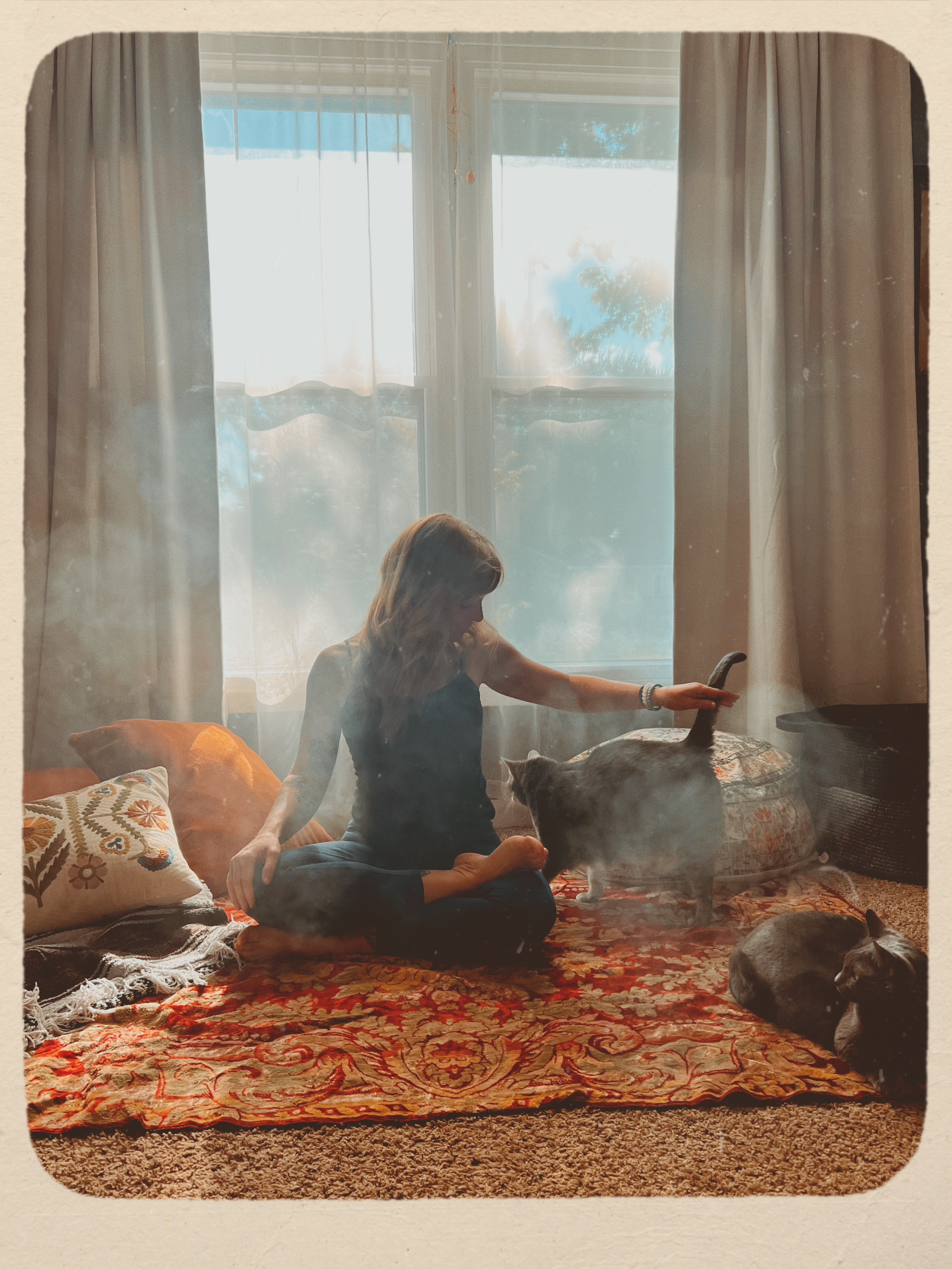
At that point in time, I already wanted out of the yoga ‘scene’. And was already crawling my way out of the toxic sludge that is social media. But anyway, I still love yoga, and I keep my practice close to me, as my own. But I quickly realized the local yoga community is just not a place for me, and that’s okay.
After understanding more about my PTSD, I have realized I didn’t need to feel so much shame about my feelings at all. And after taking an advanced class in instructing Yin Yoga, I learned that there are definitely others who feel just like me. It turns out I’m not a freak after all, well, not entirely.
In my 36th year, I’m still just learning that people don’t know what I have been through, or what I’ve seen, nor I them, but I cannot keep expecting people to understand me. And getting upset about it when they don’t. And I cannot keep expecting myself to be more like everyone else, or more “normal”, because I yam who I yam, and that is beautiful. It took a long time to see that, to see beauty in the big mess, the mistakes, the cracks and scars. It’s not an easy task to see it all, in a big gorgeous painting on the wall. But I do.
 cassidy cleland-nissen